Introduction
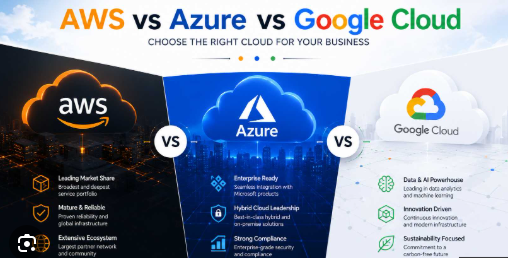
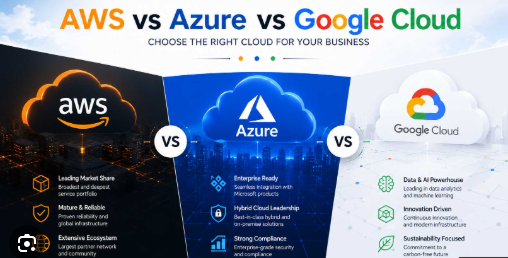
Cloud computing is an important technology used by businesses to host websites, manage servers, store data, and run applications. Two popular cloud platforms are Amazon Web Services (AWS) and Microsoft Azure.
If you are a student, fresher, or IT professional, choosing the right cloud platform can be your first step toward building cloud computing skills.
In this blog, we will compare AWS and Microsoft Azure, explore their key services, and explain how beginners can start learning cloud computing.
1. What Is AWS?
Amazon Web Services (AWS) is a cloud computing platform that provides services for computing, storage, networking, databases, security, and application deployment.
Popular AWS services include:
-
Amazon EC2 – Virtual servers
-
Amazon S3 – Object storage
-
Amazon VPC – Virtual networking
-
AWS IAM – Identity and access management
-
Amazon CloudWatch – Monitoring and observability
AWS is used for hosting websites, running applications, storing files, and building scalable IT infrastructure.
2. What Is Microsoft Azure?
Microsoft Azure is Microsoft's cloud computing platform. It offers cloud infrastructure, application hosting, databases, networking, identity management, and security services.
Popular Azure services include:
-
Azure Virtual Machines – Cloud-based virtual servers
-
Azure Blob Storage – Object storage
-
Azure Virtual Network – Cloud networking
-
Microsoft Entra ID – Identity and access management
-
Azure Monitor – Monitoring and diagnostics
Azure can be particularly relevant for organizations that already use Microsoft technologies such as Windows Server, Active Directory, and Microsoft 365.
3. AWS vs Microsoft Azure: Key Differences
| Feature | AWS | Microsoft Azure |
|---|---|---|
| Provider | Amazon | Microsoft |
| Virtual servers | Amazon EC2 | Azure Virtual Machines |
| Object storage | Amazon S3 | Azure Blob Storage |
| Networking | Amazon VPC | Azure Virtual Network |
| Identity | AWS IAM | Microsoft Entra ID |
| Monitoring | Amazon CloudWatch | Azure Monitor |
| Best starting point | AWS fundamentals | Azure fundamentals |
Both platforms provide a wide range of cloud services. The right choice depends on your learning goals, workplace requirements, and preferred technology ecosystem.
4. Which Cloud Platform Is Easier for Beginners?
Both AWS and Azure are suitable for beginners.
Choose AWS if you want to explore Amazon's cloud ecosystem and practise services such as EC2, S3, and VPC.
Choose Azure if you are interested in Microsoft infrastructure, Windows Server, enterprise identity, and Microsoft cloud services.
You do not need to learn both platforms simultaneously. Start with one, understand the fundamentals, and then explore the other when you are comfortable.
5. Skills Required to Learn Cloud Computing
Before moving to advanced cloud services, focus on these skills:
-
Computer networking and IP addressing
-
DNS, DHCP, routing, and switching
-
Linux commands and system administration
-
Windows Server fundamentals
-
Virtualization and virtual machines
-
Cloud storage and networking
-
Identity management and security
-
Monitoring and troubleshooting
These foundational skills help you understand how cloud infrastructure works in real-world environments.
6. Beginner Cloud Computing Learning Roadmap
Step 1: Learn Networking
Understand IP addressing, subnetting, DNS, DHCP, and routing.
Step 2: Learn Linux and Windows Server
Practise command-line operations, user management, file permissions, and basic server administration.
Step 3: Learn Cloud Fundamentals
Understand public, private, and hybrid cloud, along with IaaS, PaaS, and SaaS.
Step 4: Choose AWS or Azure
Start with virtual machines, storage, cloud networking, access management, and monitoring.
Step 5: Build Practical Projects
Try hosting a simple website, creating a virtual machine, configuring a virtual network, and setting up secure access.
Step 6: Prepare for Entry-Level Roles
Document your projects, practise troubleshooting, and prepare for technical interviews.
For structured beginner learning, explore the official AWS beginner learning roadmap and Microsoft Azure Fundamentals training.
7. Career Opportunities in Cloud Computing
Cloud computing skills can help you prepare for roles such as:
-
Cloud Support Associate
-
Junior Cloud Engineer
-
Cloud Operations Associate
-
IT Infrastructure Support Engineer
-
Cloud Administrator
-
Junior Systems Administrator
Job requirements vary by employer. Practical projects, networking knowledge, troubleshooting ability, and relevant certifications can strengthen your preparation.
8. Learn Cloud Computing with Global SkillTech
Global SkillTech offers IT learning opportunities for students and aspiring IT professionals.
Our IT training areas include:
-
Cloud Computing
-
CCNA Networking
-
Cyber Security
-
Linux
-
Windows Server and Active Directory
-
Python Programming
Visit our website to explore our courses and learning opportunities.
Website: https://globalskilltech.in/
More IT blogs: https://globalskilltech.in/blogs
Conclusion
AWS and Microsoft Azure are both valuable platforms for learning cloud computing. Rather than trying to learn everything at once, start with networking, Linux, and cloud fundamentals. Then choose one platform and build practical projects.
Consistent practice can help you develop the technical foundation needed to explore cloud-related career opportunities.
SEO Details
Meta Title: AWS vs Azure 2026: Which Cloud Platform Is Best for Beginners?
Meta Description: Compare AWS and Microsoft Azure in 2026. Learn the differences, essential cloud skills, beginner learning roadmap, and career opportunities.
Focus Keyword: AWS vs Azure
Related Keywords: Cloud computing for beginners, AWS course, Azure course, cloud computing roadmap 2026, cloud engineer career, AWS vs Microsoft Azure.
URL Slug: aws-vs-azure-beginners-2026
Tags: Cloud Computing, AWS, Microsoft Azure, Cloud Engineer, IT Careers, Cloud Computing for Beginners