Meta Description: Learn cyber security step by step in 2026. Explore essential skills, networking, Linux, security tools, certifications, hands-on projects, and career opportunities.
URL Slug: cyber-security-roadmap-2026
Focus Keyword: Cyber Security Roadmap 2026
Related Keywords: Cyber Security for Beginners, Ethical Hacking Roadmap, Cyber Security Courses, Linux for Cyber Security, Network Security, Cyber Security Career.
Introduction
Cyber security is one of the important fields in the IT industry. As businesses increasingly depend on digital systems, protecting networks, computers, applications, and sensitive data has become essential.
If you are a student, fresher, IT professional, or someone planning to switch careers, this cyber security roadmap will help you understand what to learn and how to begin.
Step 1: Learn Computer Fundamentals
Start with the basics of computers and operating systems.
Learn:
-
Computer hardware and software
-
Operating systems and file systems
-
IP addresses and DNS
-
Basic command-line operations
-
How the internet works
Goal: Understand how computers communicate and process information.
Step 2: Understand Computer Networking
Networking is a fundamental skill for cyber security professionals.
Topics to study:
-
OSI and TCP/IP models
-
IP addressing and subnetting
-
TCP, UDP, HTTP and HTTPS
-
DNS, DHCP and routing
-
Switches, routers and firewalls
-
VPNs and network ports
Practice: Build a small network lab and observe network traffic using Wireshark.
Step 3: Learn Linux and Windows
Cyber security professionals frequently work with Linux and Windows systems.
Linux topics:
-
Basic terminal commands
-
Files and directory permissions
-
Users and groups
-
Processes and services
-
Logs and shell scripting basics
Windows topics:
-
User accounts and permissions
-
Windows Defender Firewall
-
Event Viewer and system logs
-
Windows security settings
-
Active Directory fundamentals
Practice: Set up virtual machines and learn to administer them safely.
Step 4: Understand Cyber Security Fundamentals
Learn the basic principles behind protecting systems and data.
Important topics include:
-
Confidentiality, Integrity and Availability (CIA Triad)
-
Authentication and authorization
-
Multi-factor authentication
-
Encryption and hashing
-
Malware, phishing and ransomware
-
Vulnerabilities, threats and risks
-
Security policies and incident response
Step 5: Learn Basic Scripting
Programming is useful for automating tasks and understanding security problems.
Start with:
-
Python fundamentals
-
Variables, loops and functions
-
Reading files and processing logs
-
Basic Bash or PowerShell
-
Working with text and simple automation scripts
You do not need to become an expert programmer before starting cyber security.
Step 6: Explore Cyber Security Tools
Learn the purpose of commonly used security tools in authorized environments.
-
Wireshark: Analyze network traffic.
-
Nmap: Discover hosts and services on permitted networks.
-
Burp Suite Community Edition: Learn web application security testing.
-
VirtualBox: Create isolated practice environments.
-
Wazuh: Explore security monitoring and log analysis.
-
Kali Linux: Learn about a Linux distribution designed for security testing.
Use these tools only on your own systems or where you have explicit permission.
Step 7: Build Hands-On Projects
Practical work helps you demonstrate your skills.
Beginner project ideas:
-
Create a home networking lab.
-
Analyze sample network traffic with Wireshark.
-
Configure firewall rules on your own computer.
-
Review Windows security logs.
-
Build a basic Python log-analysis script.
-
Complete beginner challenges on TryHackMe or OverTheWire.
Document each project with its objective, steps, screenshots, findings, and lessons learned.
Step 8: Choose Your Cyber Security Career Path
After learning the fundamentals, explore a specialization.
-
SOC Analyst: Monitor alerts, investigate suspicious activity, and analyze logs.
-
Penetration Tester: Test systems with authorization and report security weaknesses.
-
Security Engineer: Implement and maintain security controls.
-
Cloud Security Engineer: Help protect cloud infrastructure and services.
-
Incident Responder: Investigate and respond to security incidents.
-
GRC Analyst: Work on governance, risk management, compliance, and security policies.
Choose a path based on your interests and build the relevant skills.
Step 9: Consider Relevant Certifications
Certifications can help structure your learning, but they do not replace practical skills.
Possible options include:
-
CompTIA Security+ for foundational security knowledge
-
Cisco CCNA for networking fundamentals
-
Microsoft security learning paths for Microsoft environments
-
Vendor-specific cloud security learning and certification paths
-
Practical security training aligned with your chosen specialization
Check current prerequisites, exam objectives, and fees before registering.
Step 10: Prepare for Cyber Security Jobs
Prepare a resume that highlights your technical skills, labs, projects, and certifications.
To improve your job readiness:
-
Create a professional LinkedIn profile.
-
Maintain a portfolio of your authorized projects.
-
Practise technical interview questions.
-
Learn how to explain security findings clearly.
-
Apply for suitable internships and entry-level roles.
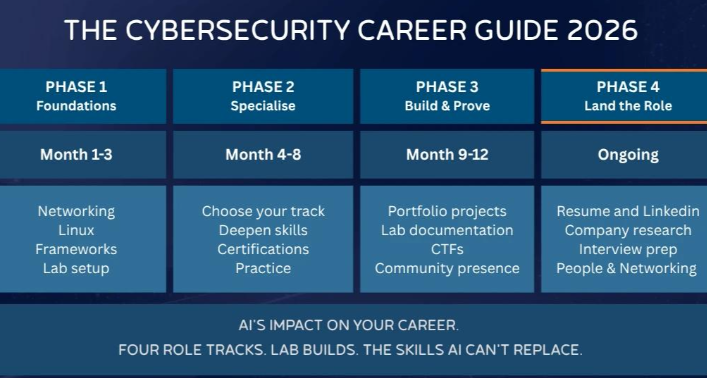
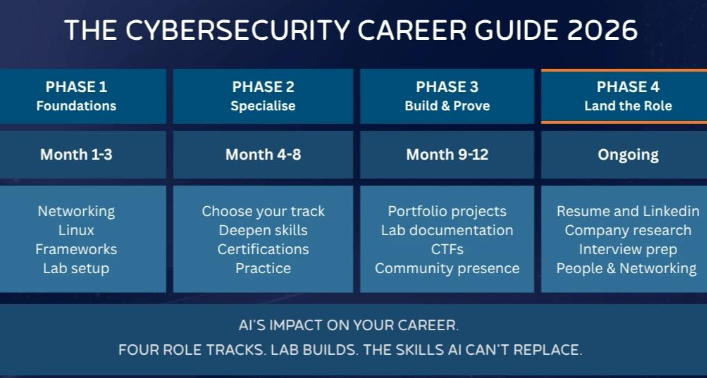
A Simple 6-Month Cyber Security Learning Roadmap
| Month | Learning Focus |
|---|---|
| Month 1 | Computer fundamentals and networking |
| Month 2 | Linux and Windows administration |
| Month 3 | Security fundamentals and basic scripting |
| Month 4 | Security tools and hands-on labs |
| Month 5 | Projects and career specialization |
| Month 6 | Portfolio, interview preparation and job applications |
This is a suggested learning plan, not a guarantee of job readiness within six months. Your progress will depend on your starting knowledge, practice time, and chosen career path.
Conclusion
A successful cyber security career starts with strong fundamentals, consistent practice, and responsible use of security tools. Learn networking, Linux, Windows, security concepts, and scripting before moving into specialized areas.
Start your learning journey with Global SkillTech. Build your IT foundation, practise in a lab, and work towards your cyber security career goals.
Call to Action: Explore IT and Cyber Security training at https://globalskilltech.in/ and contact Global SkillTech to learn about available courses.
Learn continuously. Practise responsibly. Build a safer digital world.