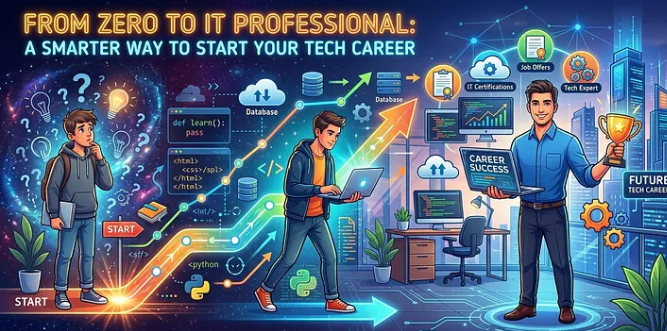
From Zero to IT Professional: A Smarter Way to Start Your Tech Career
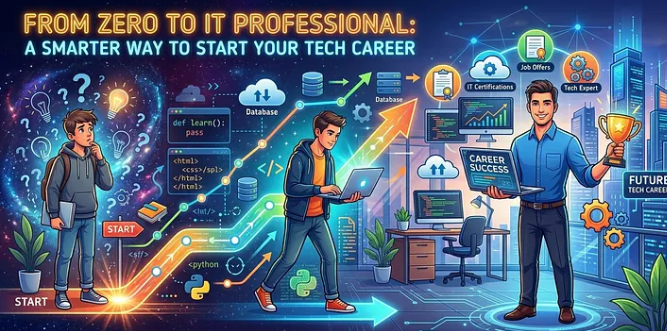
A few years ago, a friend of mine was folding clothes at a retail store, quietly dreaming of a future in IT but convinced she had missed her chance. With no degree, no technical background, and no clear direction, stepping into the tech world felt out of reach. Fast-forward to today she’s working as a junior systems administrator at a mid-sized company. What changed? She chose practical, job-oriented IT training that focused on real-world skills, allowing her to transition into the industry in under two years without committing to a four-year university.
Her journey is far from rare. The IT industry today is actively welcoming career switchers, freshers, and even non-technical graduates who are ready to learn through hands-on, industry-relevant programs. The real question is no longer “Can you start a career in IT?” but rather “How do you pick the right training path, avoid outdated courses, and land a job faster?”
If you’re starting your IT career from zero, choosing the right skills and training can make your journey much easier. This guide will help beginners understand how to build a successful career in IT through professional IT training, practical learning, live projects, and industry-relevant skills.
Why IT is one of the best industries to enter right now
Let’s start with context, because it helps to understand why the timing couldn’t be better. The global demand for IT professionals has been outpacing supply for well over a decade. According to industry reports, millions of cybersecurity positions alone remain unfilled worldwide, and that number isn’t shrinking anytime soon.
But it goes beyond security. Cloud computing, DevOps, networking, data management, technical support virtually every corner of the IT world is short on skilled workers. Companies are no longer waiting for candidates with perfect resumes. They want people who can do the work, and they’re increasingly willing to train those who show genuine potential.
“Employers don’t care where you learned it. They care that you learned it, and that you can prove it.”
This shift in hiring philosophy has cracked open the door for self-starters. And that’s the door you’re going to walk through.
Step 1: Understand the IT landscape before you pick a path
One of the biggest mistakes beginners make is jumping straight into learning without first understanding where they’re trying to go. IT is a massive field, and “I want to work in tech” is about as specific as saying “I want to work in medicine.” Are you thinking surgeon or pharmacist? The difference matters.
Here are the most beginner-friendly entry points in IT, and a quick honest take on each:
Help desk and IT support
This is where most IT careers begin and for good reason. Help desk roles teach you how to troubleshoot, communicate with users, and understand the fundamentals of operating systems and networks. It’s unglamorous, sometimes repetitive, but it builds a foundation that will serve you for years. Think of it as your internship for the real world.
Networking
If you like understanding how things connect and communicate, networking might be your calling. You’ll be working with routers, switches, protocols, and infrastructure. Cisco certifications dominate this space, and a good CCNA will open real doors.
Cybersecurity
Probably the hottest growth area in IT right now. Starting here requires a bit more foundational knowledge, but once you’re in, the career trajectory and salary potential are exceptional. The CompTIA Security+ is the go-to entry-level cert.
Cloud computing
Amazon Web Services, Microsoft Azure, and Google Cloud have fundamentally changed how businesses operate. Cloud skills are now expected even in roles that didn’t previously require them. If you enjoy working with scalable systems, this is a powerful path.
System administration
Sysadmins manage servers, infrastructure, user accounts, and the day-to-day mechanics of keeping an organization’s IT environment running. It’s detail-oriented, problem-solving heavy, and absolutely essential to every business.
Not sure which path is right for you? Start with IT support. Almost every other specialization builds naturally from that base, and it gets you employed while you figure out where your real interests lie.
Step 2: Get certified strategically, not obsessively
Certifications are the currency of entry-level IT. They prove to employers that you have standardized, verifiable knowledge, especially when you don’t have years of experience to point to. But here’s something no one tells beginners: you don’t need ten certifications before you start applying.
You need one or two, well-chosen ones.

Here’s a practical certification roadmap depending on where you want to go:
- CompTIA A+ - The universal baseline for IT support. Covers hardware, operating systems, troubleshooting, and basic networking. If you’re starting from zero, this is usually your first stop.
- CompTIA Network+ - The natural next step if you want to move toward networking or systems roles.
- CompTIA Security+ - Required or strongly preferred for most cybersecurity entry-level positions. DoD-approved and widely recognized.
- AWS Cloud Practitioner - The friendliest starting point for cloud. It’s foundational and affordable, and having it shows initiative.
- Google IT Support Certificate - Available on Coursera, highly accessible, and a legitimate credential that Grow with Google and many employers recognize.
Study for one, pass it, then move to the next. Don’t chase certifications as a hobby while avoiding the job search. The goal is employment, not alphabet soup after your name.
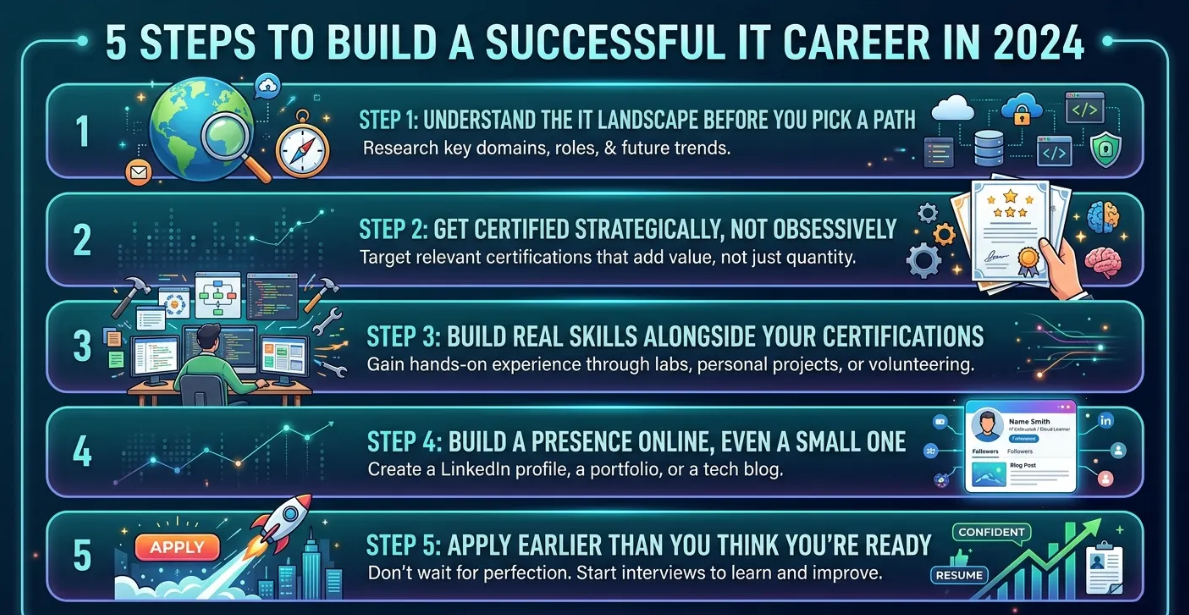
Step 3: Build real skills alongside your certifications
Here’s where a lot of beginners stumble. They pass a certification exam and assume that’s enough. It’s not. Employers want to see that you can actually do something, not just that you passed a multiple-choice test.
So how do you build practical skills with no job yet?
You build a home lab. This doesn’t have to be expensive. A used laptop, a free copy of VirtualBox, and some patience is enough to set up virtual machines, practice installing operating systems, simulate networks, and work through real-world scenarios. Document everything you do screenshots, a simple blog, a GitHub repository. That documentation becomes part of your portfolio.
You also want to spend time on platforms like TryHackMe (for cybersecurity), Cisco Packet Tracer (for networking), or AWS Free Tier (for cloud). These tools are specifically designed for beginners and give you hands-on experience in a structured way.
A candidate who says “I built a home lab and practiced X, Y, Z” will almost always outperform a candidate who just lists certifications.
Step 4: Build a presence online even a small one
You don’t need to be a LinkedIn influencer. But you do need a professional online presence that tells your story. Most hiring managers will Google your name before they invite you for an interview, and a blank search result doesn’t inspire confidence.
Start with LinkedIn. Fill it out completely. Write a summary that’s honest and human not a list of buzzwords, but a clear, simple story of where you’ve been and where you’re headed. Connect with people in IT, follow relevant companies, and engage with content in your target field.
If you’re comfortable writing, even occasional posts about what you’re learning go a long way. Not because they’ll go viral, but because they make you searchable, they show initiative, and they often lead to unexpected conversations with people who are hiring.
A simple GitHub profile showing your home lab work, scripts you’ve written, or labs you’ve completed can also be surprisingly powerful especially for roles in sysadmin, DevOps, or security.
Step 5: Apply earlier than you think you’re ready
This is the hardest advice for most people to take, and also the most important. Beginners have a tendency to wait until they feel fully prepared before applying for jobs. The problem is that feeling never comes. There’s always another certification to earn, another concept to understand, another topic to study.
The truth is: entry-level IT roles expect you to have gaps. That’s why they’re entry-level. They expect to train you on company-specific systems, processes, and tools. What they’re actually hiring for is attitude, aptitude, and evidence that you can learn. Your certifications and home lab demonstrate that.
A useful rule of thumb: if you meet 60–70% of the requirements in a job listing, apply. You won’t get every interview. You’ll get rejected more times than you’ll like. But each application teaches you something about the process, and each interview even a failed one sharpens your skills and your story.
What your first year will actually look like
Let’s be real for a second, because this industry gets romanticized online in ways that don’t help anyone.
Your first IT job will probably be help desk. The pay will be modest. Some days will involve resetting passwords for three hours straight. You’ll encounter outdated systems, unhelpful documentation, and users who are convinced that you personally broke their computer. It’s okay. That’s not failure that’s the job, at first.
What matters is what you do with that time. Are you watching how senior engineers solve problems? Are you asking questions? Are you continuing to study on the side, moving toward your next certification or next role? The people who move from help desk to sysadmin to something more specialized in two or three years are the ones who treated that first role as a learning environment, not just a paycheck.
Your first year is your second education. Treat it accordingly.
A word on community don’t go it alone
One resource that’s perpetually underused by beginners is community. The IT world has an enormous number of forums, Discord servers, subreddits, and local groups where people are actively discussing exactly what you’re trying to learn. r/ITCareerQuestions on Reddit alone has hundreds of thousands of members who have been exactly where you are and answer questions daily.
These communities also share job postings, review resumes, and offer the kind of unfiltered advice you’ll never get from a career coach. Use them. Be humble, ask questions, contribute when you can. The connections you make in those spaces are often more valuable than you’d expect.
Final thoughts
Breaking into IT from scratch isn’t easy but it’s far more achievable than most people think. The path is simple: choose one direction, earn a meaningful certification, build real-world skills through hands-on practice, start applying before you feel fully ready, and stay active in the right communities. Platforms like ExcelPTP can help guide you with practical training and career-focused learning.
The industry isn’t just looking for talent it’s looking for people who are willing to show up, stay consistent, and put in the work. That’s the real story behind every successful career switch into IT.
You don’t need permission. You don’t need a perfect resume. You just need to begin.